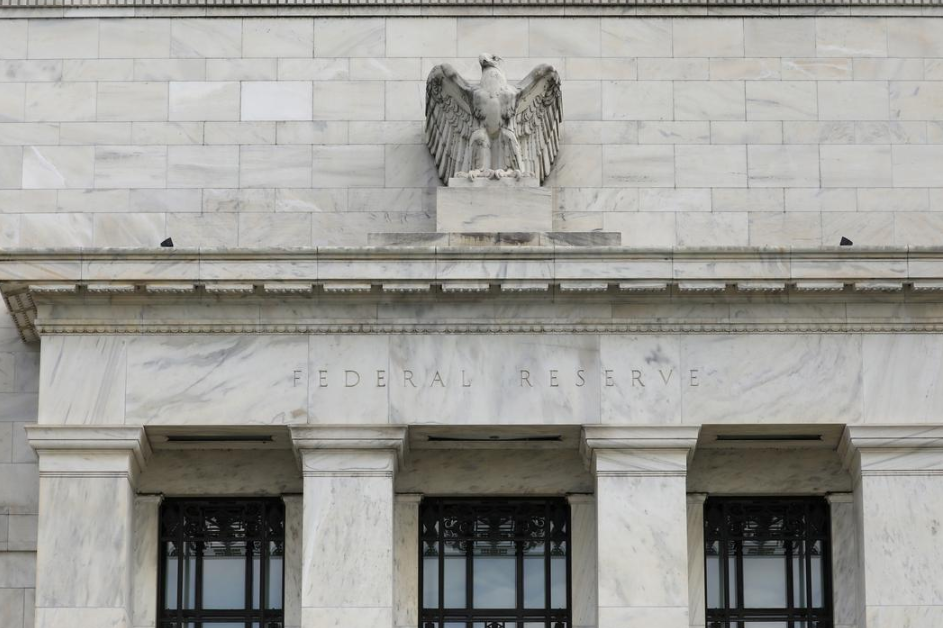
A combination of concern regarding a re-acceleration of COVID-19 cases and a natural tendency for a pause once the market regained its beginning year levels resulted in a decline in major market averages last week. The Federal Reserve which has pledged economic support throughout the COVID-19 crisis left short-term interest rates unchanged near zero …
Up Off the Mat
While the economy still has room for improvement, the stock market has staged an impressive recovery. Coming off the March low, the S&P 500 Index has advanced 45%. The containment of COVID-19, Federal Reserve’s actions to provide liquidity into the financial system, and continued incremental positive news on the opening of the economy have …
Consumers, Start your Engines
Despite the widespread economic displacement from the COVID-19 lockdown, an optimistic case can be made for a rebound in consumer activity over the next few months. The U.S. consumer accounts for approximately two-thirds of economic activity, so a healthy consumer is the engine of the U.S. economy. With the continued phase-in of activity, workers …
Stepping Out
What did you do this weekend? Some consumers purchased groceries, got takeout food, or dined at a restaurant. Some would-be travelers stayed home, where as others drove or flew on trips. Some consumers went to a mall or big box store, shopped at a small business, or received packages at their homes. The U.S. …
Almost Summer
Increased testing for COVID-19 is providing greater knowledge of the extent of the spread of the virus and its lethality. Several biotech and pharmaceutical companies are progressing with the development and testing of potential vaccines. The world keeps moving forward toward a gradual re-opening of social and economic activity. At the same time, Federal …
Let’s Get Back to Work
Focus on the impact of the COVID crisis and the pace of re-opening of the world economy has made the first quarter earnings reporting season somewhat less impactful than usual. The sharp downturn in economic activity made forecasting difficult and even many companies were unable to accurately provide guidance on the impact on their …
Replenishing
Incremental social and economic activity continues across the globe. Some harder hit countries and specific areas of the United States will take longer to re-open, but the transition can be seen as restrictions on individuals and businesses in many areas continue to relax. Increased economic activity should follow. For first quarter earnings, 275 companies …
Opening Day
Some States have begun partial re-opening of previously closed businesses and activities, and several other States have been discussing re-opening plans. The opening of the economy is likely to be state-by-state and industry-by-industry. COVID cases have risen where testing has increased, but hospitalizations and deaths appear to have peaked in most States giving governors …
The End of the Beginning
The equity markets put together back-to-back winning weeks as the economy and COVID-19 news is less worse than it was potentially forecast to be just a few weeks ago. The curve appears to be flattening on COVID, select parts of the U.S. are set to be opened this month, and most of the early …
Looking Under the Hood
Global equity markets had a strong recovery rally last week as scenarios begin to firm up of when the COVID-19 peaks in various countries and the global economy begins to re-open. While the social and economic recovery is likely to last several months or longer, the financial markets tend to anticipate outcomes and a …
Waiting on Normal
The equity market gave back some of its recent gains last week, but volatility also decreased which we view as a welcome signal relative to the higher levels of volatility we’ve seen over the past few weeks. Uncertain timing on a return to normalcy in society and the economy is likely to weigh on …
Bridging the Gap
The Coronavirus Aid, Relief, and Economic Security Act (“CARES Act”) was passed by the Senate and the House of Representatives and was signed by the President on Friday. If uncertainty about the impact of the coronavirus was centered on the two unknowns of the infection itself and what the government was doing about it, …
Taking Action
As the measures taken to slow the spread of the coronavirus (COVID-19) are beginning to take a toll on the economy through a reduction in activity in travel, dining, entertainment and other consumer spending categories, the U.S. government has been formulating ways to help stem the economic impact on both consumers and businesses. Two …
March Madness
Uncertainty over the economic impact of the coronavirus (COVID-19) continues to negatively impact markets. The declaration of a national emergency on Friday allows coordinated action and financial resources to be used to shore up the economy and provide assistance to public health organizations. In our Dissecting Headlines section, we look at the national emergency …
Rethinking Your Risk Tolerance?
Link to the Risk Tolerance Questionnaire Here The investment markets have been volatile the past few weeks. With events like the COVID-19 outbreak, it can be difficult to know when they can happen or what impact they can have on the stock market and your investment portfolio. One thing you can do to be …
Silver Linings
As markets continue to experience volatility amid economic concerns from the spread of the coronavirus (COVID-19), we want to look at counterbalancing effects we are seeing to stabilize the economy. We mentioned last week we believe the economy should self-correct over time. While 10-year Treasury yields have fallen, the Federal Reserve also made the …
Keeping Perspective
Global equity markets had their worst week in several years last week. The weekly decline, due to economic concerns surrounding the spread of the coronavirus (COVID-19), has pulled all major stock indices into negative territory for the year. Market volatility, which included several large intra-day swings, is indicative of the uncertainty. In our Dissecting …
Risk On / Risk Off
Continued spread of the coronavirus (COVID-19) led stocks to the downside late last week. News of the virus also spreading outside of China to countries such as Italy has brought additional concern to investors trying to understand the potential economic impact of the outbreak. We view the issue as transitory. While the first quarter …
Looking Back Ten Years
The stock market bottomed 10-years ago on March 9, 2009, signaling the beginning of a recovery from the financial crisis. Since that time, the S&P 500 Index has achieved a 400% total return, the Dow Jones Industrial Average has achieved a 402% total return, and the NASDAQ 100 has achieved a 650% total return. If …
Wrapping up Earnings and Focusing on Economic Data
The S&P 500 Index advanced 0.4% last week, its fifth consecutive weekly increase. Crude oil fell 2.5% for the week. As we near the end of the quarterly earnings season, much of the fundamental news from reporting companies is out and speculation on how current macro and industry data may impact earnings for first quarter …
Continue reading “Wrapping up Earnings and Focusing on Economic Data”
Extending the U.S. – China Trade Deadline
US-China trade expiration is getting an extension until after Trump and Xi meet later in March. Chinese vice premier Liu He has been in Washington for negotiations all week and into the weekend. Both sides seem eager to do something constructive, but it looks like nothing will be finalized until later in March. This stops …
Continue reading “Extending the U.S. – China Trade Deadline”
Back Open for Business
A deal was struck to avoid a resumption of the partial U.S. government shutdown last week. Macroeconomic Crisis One averted, even though there may be political ramifications of the President’s decision to push ahead with funding the wall for the U.S. southern border through emergency measures. We’re much more concerned about economics, business, and investing, …
A Dissipating “Axis of Worry”
A Dissipating “Axis of Worry” Many of the concerns that caused the steep drop in the stock market in the fourth quarter of 2018 have started to dissipate. The combination of rising interest rates, a trade dispute between the U.S. and China, lower oil prices, and the U.S. government shutdown all rolled into what we …